
Atlanta averages more than 4 inches of rain in April. That rainfall camouflages a lot of plumbing problems. A soggy yard looks normal, a damp crawl space feels seasonal, and the drip of a cracked outdoor spigot looks like runoff. But some of the most expensive plumbing damage in metro Atlanta homes happens in the 60 days on either side of spring storms. Here is how to tell the difference between rain and a real leak.
Why spring rain makes outdoor leaks so hard to spot
The average Atlanta yard stays visibly wet for two to four days after a heavy storm. Our red clay soils hold water far longer than the sandy soils in coastal Georgia, which is why a single Thursday-night thunderstorm can keep the grass squishy into the weekend. That baseline of dampness is exactly what hides a plumbing leak.
A slow outdoor leak adds a steady trickle of water to ground that is already saturated. You do not notice a new wet spot because the whole yard is already wet. Hose bibs, irrigation laterals, and pool fill lines make this even trickier because they only leak when they are pressurized, which may be only a few hours a week. By the time you see visible damage, the leak has often been running for months.
The expensive cases we see at Delta Plumbing almost always start the same way: the homeowner noticed a slightly wet patch in January or February, assumed it was weather, and did not get a professional eye on it until July when the water bill tripled.
6 outdoor leak locations to check after every heavy rain
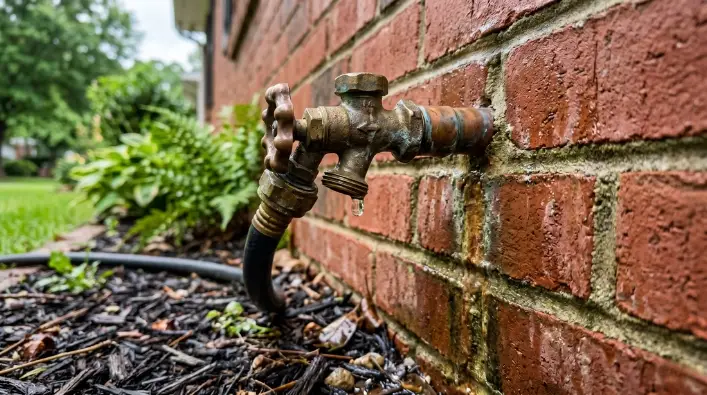
1. Hose bibs and outdoor spigots
Georgia’s brief hard freezes split hose bib stems every winter. The crack often stays hidden inside the wall cavity and only drips when the valve is open. Look for rust, mineral staining, or dampness at the foundation below each spigot.
2. Main water line between the meter and the house
This is the single most expensive hidden leak a homeowner can have. It runs 24/7, usually sits 18 to 36 inches deep, and can lose thousands of gallons a month before anyone notices.
3. Irrigation zones and sprinkler heads
Broken heads, cracked laterals, and leaking valves all produce wet spots that only show up when a zone runs. Walk the yard during a full irrigation cycle at least once in April.
4. Pool fill lines and equipment pads
Autofill lines and equipment pad connections are a classic source of phantom leaks. A pool that needs topping off more than a quarter inch per day (in moderate weather) is probably leaking somewhere.
5. Outdoor kitchens and yard fixtures
Outdoor sinks, ice machines, and pot fillers often share a trench with irrigation and main lines. A leaking union can go undetected for years.
6. Sewer cleanout and septic lines
Cleanouts that back up or ooze during heavy rain often indicate a cracked or root-intruded sewer lateral. The symptom only shows up under wet conditions.
Warning signs even the best Atlanta landscapers miss
Soft, always-wet patches in the yard that persist for more than 5 days after the last rain are the most reliable red flag. So are isolated strips or circles of grass that grow faster or greener than the surrounding lawn. Leaking water carries dissolved minerals that act like fertilizer.
Other clues include small sinkholes or areas of obvious soil settlement, moss or algae at the base of the foundation wall, and a water meter that still spins when nothing inside the house is running. That last one is the single most diagnostic test a homeowner can do at home.
How to do the 30-minute outdoor leak test yourself
You can confirm or rule out a leak on your property in under half an hour.
- Turn off every indoor fixture and appliance that uses water. This includes icemakers, washing machines, dishwashers, and humidifiers.
- Find your water meter. In most Atlanta neighborhoods it is at the curb under a round lid marked “Water.” Lift the lid and note the dial position. Most meters also have a small red or silver triangle called the leak indicator.
- Wait 30 minutes without using any water anywhere on the property.
- Read the meter again. If the triangle moved, you have a leak somewhere between the meter and your fixtures.
- To isolate the leak, turn off your irrigation shutoff and retest. If the triangle stops, the leak is on the irrigation side. If it keeps moving, the leak is on your main service line or somewhere inside the house.
This test costs nothing and takes less time than a coffee break. It is the first thing a good plumber will ask you about before sending out a detection tech.
DIY versus professional leak detection
DIY is enough when the leak is already visible: a split hose bib, an obviously broken sprinkler head, a cracked cleanout cap. If you can see where the water is coming from and you are comfortable with basic plumbing, you can often handle it yourself.
Call a pro the moment you suspect the main service line, slab, or foundation. The same goes for any water bill spike you cannot explain. Professional leak detection uses acoustic microphones that pick up the sound of pressurized water escaping a pipe underground, thermal imaging to reveal temperature differences where water is moving, tracer gas for inaccessible slab or sub-floor runs, and line correlators that triangulate the exact leak location. The goal is to repair in a 2-foot section rather than tear up 50 feet of yard.
The real cost of ignoring a hidden outdoor leak
Atlanta clay swells when wet and shrinks when it dries. A leak running under or near the foundation causes the soil to move unevenly, and that shows up as cracks in drywall, doors that stop latching, and in severe cases, horizontal cracks in basement walls. Foundation repair starts around $5,000 and can climb far higher.
Water bill spikes of 2x to 10x are common and last until the leak is found. Damage to nearby trees, landscaping, retaining walls, and hardscape is usually not covered by homeowners insurance. Most HO-3 policies exclude “gradual damage,” which is exactly what a hidden outdoor leak produces. Some insurers offer service-line endorsements that cover main line repair, and those are worth asking about.
If the leak is near a drain field, the extra saturation can push a marginal septic system over the edge and trigger a backup.
When to call Delta Plumbing
Call us for any unexplained wet spot that lasts more than 5 days after rain has stopped. Call us for a water bill that jumps 20 percent or more over last month’s baseline. Call us for low indoor pressure after a storm. And call us the moment you see visible erosion or settling near the foundation.
FAQs
Does homeowners insurance cover an outdoor water line leak? Usually not. HO-3 policies cover sudden, accidental damage but exclude gradual leaks and most service-line damage. A separate service-line endorsement is worth considering and typically runs under $100 a year.
Who is responsible for the water line between the meter and the house? In most Atlanta jurisdictions, the homeowner owns everything from the meter to the house. The utility owns from the main in the street to the meter.
How do you find a leak under a driveway or slab? Acoustic listening combined with thermal imaging. Once the leak is located within 6 to 12 inches, we can do targeted repair instead of tearing up the whole driveway.
How long does professional leak detection take? Most residential detections are done within 60 to 90 minutes. Complex cases with long runs or multiple suspected leaks can take longer.
Can heavy rain actually cause a main line leak? It can trigger one. Saturated clay expands and contracts, stressing older pipes. Many Atlanta main line failures show up in the first week after a big storm.
Schedule professional leak detection
Think you have a hidden outdoor leak? Delta Plumbing uses electronic leak detection to find underground leaks without destroying your yard. Call 770-474-5555 or request leak detection services in metro Atlanta. Learn more about slab leak repair and underground leak detection.
Further reading: EPA Fix a Leak Week guide and the City of Atlanta Watershed Management.