
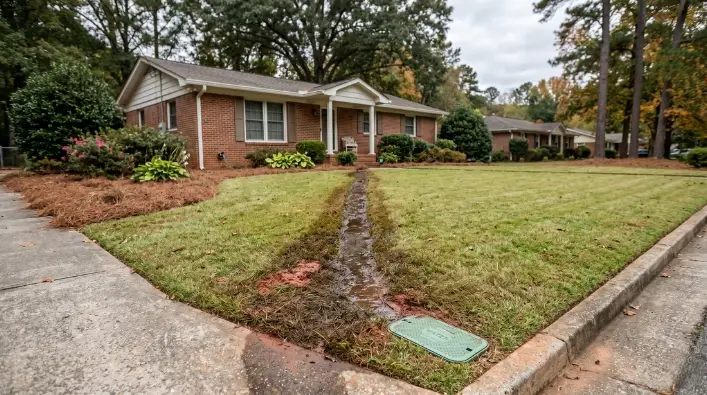
Most Atlanta homeowners see a wet spot in the yard and assume it is the sprinkler. Sometimes it is. But the difference between a sprinkler leak and a main water line leak is the difference between a $200 fix and a $5,000 emergency excavation. Here is the 5-minute test that settles it and the signs that tell you which one you are dealing with.
What each type of leak actually is
Before you can diagnose, you need to know what you are looking at.
Main water line leak
The main water line, also called the service line, runs from the city meter at the curb to the point where water enters your house. It is always under full city pressure, typically 45 to 75 psi in metro Atlanta. Any leak on this line is leaking 24 hours a day, every day, whether anyone is home or not. In most Atlanta jurisdictions, the homeowner owns this line from the meter to the house, and all repairs are the homeowner’s responsibility.
Sprinkler or irrigation leak
An irrigation system is fed from the main line through a backflow preventer and an irrigation shutoff valve. Everything downstream of that valve is pressurized only when your irrigation controller turns on a zone. A broken sprinkler head on a zone that runs twice a week at 6 a.m. may be leaking for less than an hour total per week. That is enough to create a wet spot but much less damaging than a main line leak of the same size.
The 5-minute test that tells you which one you have
This test isolates the irrigation system from the rest of your plumbing and lets the meter tell you which side is leaking.
- Locate your irrigation shutoff valve. It is almost always in a green or tan plastic box somewhere between the meter and the house, often next to a hose bib or in a planting bed.
- Turn the irrigation shutoff to the off position.
- Turn off every indoor fixture and appliance that uses water.
- Find the water meter and note the position of the leak indicator triangle. This is the small red or silver spinning disc on the meter face.
- Wait 15 minutes without using any water. Check the triangle again.
Interpretation is simple. If the triangle is still spinning with the irrigation valve closed, the leak is on your main service line between the meter and the house, or somewhere inside the house. If the triangle stops the moment the irrigation is shut off, the leak is on the irrigation side.
This test takes one trip around the yard and answers the question that will drive every decision after it.
Telltale signs of a main water line leak
Main line leaks tend to produce a consistent pattern. Lower water pressure throughout the entire house is one of the earliest clues, because the leak is drawing pressure before the water reaches any fixture. You may also notice a wet or sunken area in a straight line between the meter at the curb and the front wall of the house, which usually traces the buried line.
The water meter leak indicator will spin continuously, even with every fixture off. Interior faucets may deliver occasional sand, rust flecks, or cloudy water because the breach in the pipe is drawing soil into the line. Finally, a main line leak spikes your water bill even in winter months when the irrigation system is dormant. If December’s bill is double November’s and nothing else changed, assume main line until proven otherwise.
Telltale signs of a sprinkler system leak
A sprinkler leak behaves very differently. The wet spot only appears or enlarges when a zone is running. Outside of the watering schedule, the affected area often looks normal.
The wet area is usually limited, often centered around a single head, valve box, or lateral run. You may see visible spray from a cracked head, a puddle near a valve box, or geysering from a shallow break. Water bills typically peak in summer when irrigation runs most and drop back in winter. If your winter bill looks fine but your June bill is unreasonable, irrigation is the likely culprit.
Why Atlanta homeowners get this wrong
There are four reasons diagnosis is harder here than in most of the country.
Our red clay holds moisture for days after rain, so a slow main line leak can look exactly like normal post-storm wetness. Irrigation lines and main service lines are often buried in the same trench on older installs, which means a wet strip of yard could be from either pipe. Irrigation systems installed by previous owners are frequently undocumented, so you may not know where valves or zones run. And pool fill lines add a third suspect, complicating everything.
When you cannot rule out any of these three, the right move is a professional detection call rather than exploratory digging.
What to do next
If it is a main water line leak
Shut off the water at the street meter if you have a key, or at the main shutoff where the line enters the house. Call a licensed plumber right away. Do not rely on a clamp-patch fix as a long-term solution. Get quotes that include trenchless replacement options rather than a default dig-and-replace, because modern pipe bursting or pipe lining often saves thousands of dollars in yard restoration.
If it is a sprinkler leak
Cap the broken head or shut off the affected zone at the valve. Call an irrigation contractor or a licensed plumber who handles irrigation. Decide whether to repair the single failed component or rebuild an aging system. If the system is older than 15 years and you have had multiple repairs, rebuilding often pays for itself in saved water within 2 to 3 summers.
What Delta Plumbing does on a main line call
When you call us for a suspected main line leak, we confirm the leak location with electronic detection before any shovel goes in the ground. That means acoustic listening, thermal imaging, and line tracing to pinpoint where the pipe has failed. We call in 811 for utility marking where required.
Once we know exactly where the leak is, we excavate only where the leak is, not across the whole yard. When the line allows it, we offer trenchless pipe replacement so your driveway, landscaping, and hardscape stay intact. All replacements are installed with PEX or copper to current Georgia code and pressure-tested before we backfill.
FAQs
Does Atlanta Watershed cover main line leaks? No. The homeowner owns the main water line from the meter to the house. The utility is only responsible for repairs on their side of the meter.
What is the typical cost of a main water line replacement in Atlanta? Most residential replacements run $3,500 to $8,500 depending on length, depth, driveway crossings, and whether trenchless methods are possible. Long runs under mature trees or through retaining walls can run higher.
Can a sprinkler leak cause foundation damage? Yes, if the leak is near the foundation and runs for weeks or months. Clay expansion under uneven moisture lifts and settles the footing unevenly. Move fast on any irrigation leak within 10 feet of the house.
How deep are main water lines in Georgia? Typically 18 to 36 inches below grade, though older homes can be shallower. Local codes may require a minimum of 24 inches, and some jurisdictions specify the line be below the frost line.
Will Delta Plumbing repair my irrigation system too? We handle the main service line, shutoffs, and the connection between irrigation and the house. For sprinkler heads and zone programming, we often partner with an irrigation specialist so you get the right expertise for each piece of the system.
Get a professional diagnosis
Not sure where your leak is? Delta Plumbing offers electronic leak detection to pinpoint the issue before we dig. Call 770-474-5555 or browse our leak detection services. We also handle full plumbing repair and waterline repair and installation.
Further reading: EPA Fix a Leak Week and Atlanta Watershed customer service.