
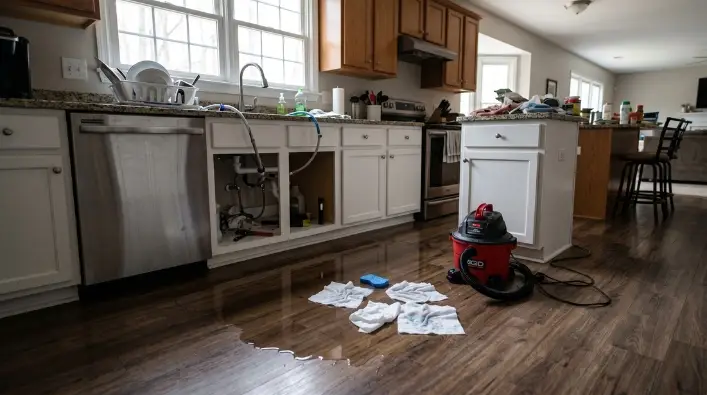
A burst pipe dumps 8 to 12 gallons of water into your house every minute. That is roughly 4 bathtubs every hour. What you do in the first 10 minutes of a plumbing emergency matters more than how fast the plumber can get there. Here is the minute-by-minute action plan every Atlanta homeowner should know before they need it.
Before we start: know these two things about your house right now
Find these two shutoffs today, before anything goes wrong.
Your main water shutoff. In most metro Atlanta homes it is either just inside the foundation wall where the service line enters the house, on an exterior wall near the hose bib, or at the water meter box at the curb (you may need a meter key). Tag it with tape or a marker so anyone in the house can find it in the dark.
Your gas shutoff. Usually at the gas meter on the side of the house. If you ever smell gas, do not flip light switches, do not use your phone indoors, and evacuate before calling anyone.
Five minutes spent locating these now saves thousands of dollars of damage later.
The first 10 minutes, minute by minute
Minute 0 to 1: Stop the water
Your first job is to turn off the water source. Start with the nearest fixture shutoff: under a sink, behind a toilet, on a supply line to a washing machine. If the fixture shutoff is stuck or missing, go straight to the main shutoff you found earlier. For a water heater leak, close the cold water inlet valve on top of the unit rather than the whole-house main, which keeps cold water available for the rest of the house.
Minute 1 to 2: Kill power to the affected zone
Water and electricity are a lethal combination. Open your electrical panel and flip the breakers for any flooded room or outlet. Unplug nearby appliances only if you can approach them without stepping in water. If water has reached the electrical panel itself, do not touch it. Call the power company.
Minute 2 to 4: Document for insurance
Before you clean anything, take photos and video. Capture every affected surface, object, and piece of furniture. Film the waterline height on walls, cabinets, and baseboards. Shoot receipts, serial numbers on damaged appliances, and any visible source of the leak. Insurance adjusters rely heavily on photo evidence. Two minutes of filming here protects a claim worth thousands later.
Minute 4 to 6: Contain the water
Now clean up. Towels, buckets, and a wet-dry shop vac are the standard toolkit. Move furniture and area rugs to a dry part of the house to prevent secondary damage. If outdoor humidity is lower than inside, open windows to start drying the air. Pull back any wet carpet at the edges so air can reach the pad, which is where mold starts.
Minute 6 to 8: Call a licensed emergency plumber
Choose a plumber licensed in Georgia with 24/7 dispatch. Ask for the license number if you have not worked with them before. Describe what happened, what you have already shut off, and where the shutoffs are located. Request an ETA and a direct phone number for the dispatched technician so you are not stuck calling the main line for updates.
Minute 8 to 10: Call your insurance
Open a claim or at least log a ticket. Most insurers have 24-hour claim lines. Ask whether they have preferred remediation vendors who can dry out the house after the plumber completes the repair. Know that most HO-3 policies cover sudden damage, like a burst pipe, but exclude gradual leaks and general wear. Your documentation from minutes 2 to 4 will matter here.
Scenario playbooks
Not every emergency is a burst pipe. Here is how to handle the five most common calls we get at Delta Plumbing.
Burst pipe: Shut off the water at the nearest fixture shutoff or the main. Kill power to any flooded room. Contain the water. Call.
Sewage backup from a floor drain: Stop using every fixture in the house immediately, including sinks, tubs, and dishwashers. Do not flush. Call right away. Continuing to use water while a sewer line is blocked pushes more sewage into the house.
Overflowing toilet: Close the toilet shutoff valve at the base of the tank. Do not flush again. If the water was clean tank water, contain and call during business hours. If it was sewage, treat it as an emergency.
Water heater leak: Close the cold water inlet valve on top of the heater. Turn off the gas (via the yellow valve) or the electric breaker to the unit. Contain and call.
Suspected gas leak: Evacuate the house first. Call your gas company from outside. Then call a licensed plumber if the issue is on a plumbing-side gas line.
Septic alarm or backup: Stop all water use in the house. Do not run appliances. Call a plumber who handles septic systems and can bring vacuum equipment.
What not to do
Do not flush toilets if you suspect a sewer blockage. Do not run the dishwasher or washing machine. Do not pour liquid drain cleaner into a backed-up line; it rarely works and makes the plumber’s job harder. Do not try to snake a main sewer line yourself with a rental auger. And do not wait until morning because the drip looks small. Hidden water damage multiplies overnight.
Small emergency kit every Atlanta homeowner should keep
A dedicated plumbing emergency kit lives in a labeled bin under the kitchen sink or in the garage. Stock it with a water meter key, a pipe shutoff wrench, self-fusing silicone tape (also called tank tape), a rubber pipe repair patch with hose clamps, an adjustable crescent wrench, a small wet-dry vacuum, a stack of shop towels, and a laminated card with emergency numbers taped inside the cabinet door.
Total cost is under $100. Total time to assemble is under an hour. Every plumber you ever call will thank you for having it.
When to call Delta Plumbing
Call us the moment you have water off and you are stable. Specifically, call immediately for slab leaks, main line ruptures, septic alarms, sewage backing up, and anything near a gas line. We are licensed in Georgia, available 24 hours a day, and have served metro Atlanta for 45 years.
FAQs
Does homeowners insurance cover emergency plumbing? Typically yes for sudden damage such as a burst pipe or a failed supply line. Usually no for gradual leaks, neglect, or preventable wear. Always document the damage within the first hour and open a claim the same day.
Is Delta Plumbing actually available 24/7? Yes. We answer emergency calls around the clock for metro Atlanta. Non-emergency requests get scheduled during normal business hours.
What is the average after-hours rate in Atlanta? After-hours emergency plumbing typically runs $200 to $400 for the dispatch fee plus parts and labor. Rates vary by severity and time of day. Ask for a ballpark before the tech is dispatched.
Should I turn off the whole house breaker? Only kill breakers for the affected zone unless water has reached the main panel. A whole-house shutdown removes AC, refrigeration, and sump pump power, which can create a second problem.
What qualifies as a plumbing emergency? Anything causing active water damage, sewage exposure, gas risk, or loss of service to a critical fixture like the only toilet in the home. Everything else can usually wait for business hours.
Save this number before you need it
Already in the middle of a plumbing emergency? Call Delta Plumbing 24/7 at 770-474-5555. Licensed Georgia plumbers, 45 years serving metro Atlanta. We also handle Atlanta plumbing repair, sewer line services, and water heater services.
Further reading: Insurance Information Institute on what standard policies cover and Ready.gov home emergency preparedness.