
A slab leak is one of the few plumbing problems that can run for weeks without an obvious sign. The pipe is hidden in the concrete foundation under your home, so the water has nowhere visible to go. By the time most homeowners notice, the leak has already driven up the water bill or started to affect the floor.
Catching one early saves money and spares your foundation. After decades repairing slab leaks across Atlanta, we have learned the signals that point to one, and the good news is that they are easier to spot than people expect once you know what to watch for.
What a Slab Leak Actually Is
Most Atlanta homes built on a concrete slab have water lines running through or beneath that foundation. A slab leak happens when one of those pipes cracks or wears through and begins releasing water under the house.
The causes are usually age, shifting soil, or pipes rubbing against concrete and gravel over the years. Georgia’s clay soil expands and contracts with our wet and dry seasons, and that movement puts steady stress on the lines below your home.
The Early Warning Signs
The clearest early clue is a water bill that climbs with no change in your habits. Water is running around the clock, so the cost shows up before anything else does.
Other signs include the sound of running water when every fixture is off, warm spots on the floor when the hot water line is the one leaking, a drop in water pressure, or cracks appearing in flooring and walls as the soil beneath shifts. A musty smell or unexplained dampness near the floor can also point to moisture collecting under the slab.
Why Summer Makes It Worse
Atlanta summers swing between heavy storms and dry stretches, and that cycle is hard on the soil under your foundation. Clay swells when it is saturated and shrinks when it dries out, and the repeated movement can stress an already weak pipe until it gives.
The heat compounds it. Hot water lines that are already near failure expand and contract more in summer, and a hairline crack can open into a steady leak almost overnight. A pipe that held through a mild spring sometimes lets go once the season turns.
Summer is also when water use climbs, which means a slab leak wastes more and costs more during the months it is most likely to appear. Staying alert to the signs through the season pays off.
How the Leak Gets Found
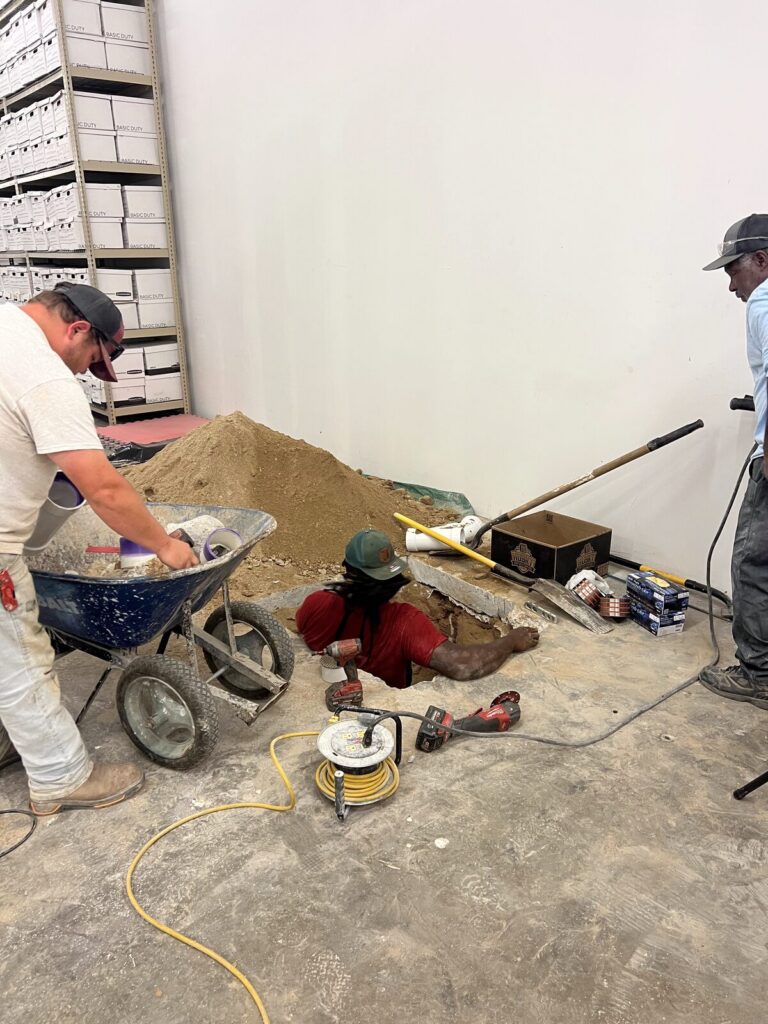
You do not have to jackhammer the floor to locate a slab leak. We use electronic leak detection equipment, acoustic listening tools, and pressure testing to pinpoint the exact spot before any concrete is touched.
Finding the leak precisely is what protects your home. It lets the repair stay small and targeted instead of opening up large sections of the slab on guesswork.
Repair Options Once It Is Located
The right repair depends on the pipe’s age and condition. A single, isolated leak in otherwise sound piping can often be spot-repaired by accessing just that section.
If the lines are old and failing in more than one place, rerouting the affected run or a partial repipe may be the better long-term choice. We walk you through the trade-offs so you are choosing a fix that holds, not just one that gets you through the week.
Don’t Wait It Out
A slab leak does not heal on its own, and the longer it runs the more it threatens your foundation, your flooring, and your wallet. Standing water under a home can eventually undermine the concrete and invite mold.
If you suspect one, shutting off the water and calling a plumber promptly is the cheapest path. Early action almost always means a smaller, simpler repair.
Frequently Asked Questions
How do I know if I have a slab leak?
The most common early sign is a water bill that rises with no change in usage. You might also hear running water when everything is off, notice warm spots on the floor, see a drop in pressure, or find new cracks in flooring or walls. Any one of these is worth investigating, and several together strongly suggest a slab leak.
Can a slab leak be found without breaking the floor?
Yes. Professional leak detection uses electronic and acoustic equipment along with pressure testing to locate the leak precisely before any concrete is opened. Pinpointing the spot first is what keeps the repair small and avoids tearing up large sections of the slab.
Will a slab leak damage my foundation?
It can if it is left to run. Water collecting under the concrete can erode the soil that supports the slab and, over time, contribute to settling and cracks. It can also lead to mold and damaged flooring. Catching and repairing a slab leak early is what prevents that kind of structural damage.
Are slab leaks more common in summer?
They can appear more often in summer because Georgia’s clay soil swells and shrinks as it moves between saturated storm periods and dry spells. That repeated movement stresses the pipes beneath the foundation. Higher summer water use also means a slab leak wastes more during the months it is most likely to show up.
Think You Might Have a Slab Leak?
Delta Plumbing has located and repaired slab leaks across Atlanta for more than four decades, using detection equipment that finds the problem without tearing up your home. We will give you a straight answer and a repair plan that fits your situation, with financing available on larger jobs.
Schedule service online or call (770) 474-5555 to have your slab leak found and fixed before it spreads.