
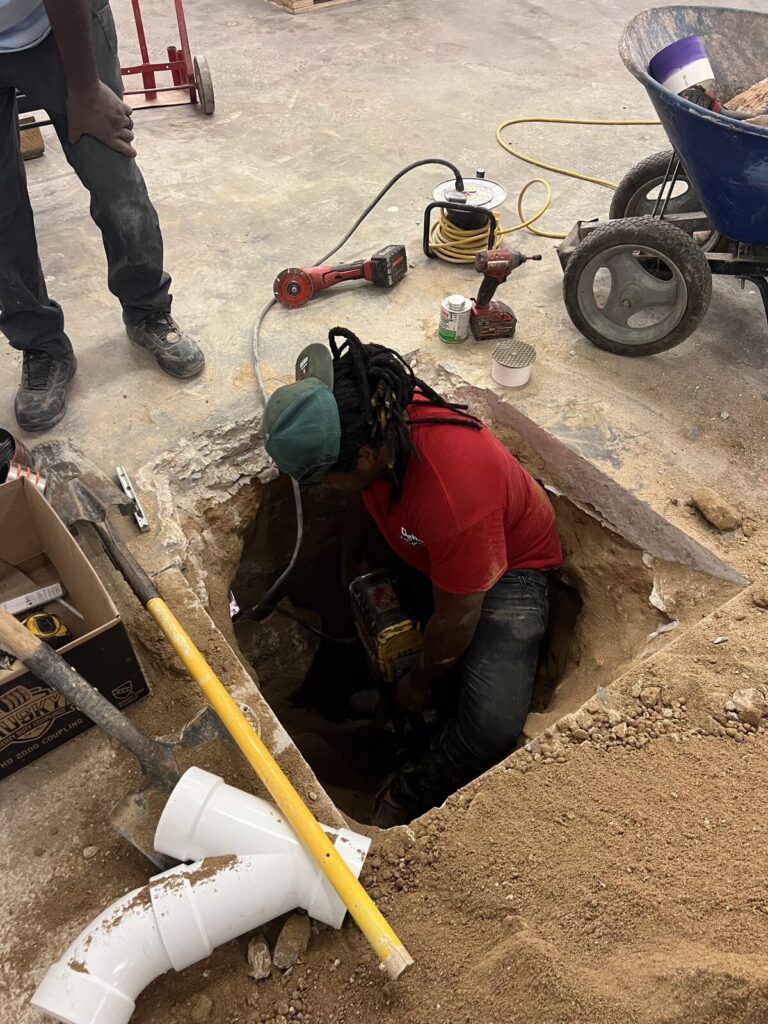
Atlanta is a city of trees, and most of the time that is a gift. The shade keeps summer bearable and the mature canopy is part of what makes our neighborhoods feel like home. But those same trees send roots searching for water, and the steady moisture inside a sewer line is exactly what they are looking for.
Root intrusion is one of the most common causes of sewer line trouble we see in older Atlanta neighborhoods. It builds slowly, often without warning, until a backup forces the issue. Knowing the signs lets you deal with it on your terms instead of during an emergency.
Why Roots Find Their Way In
Tree roots grow toward moisture, and a sewer line carries a constant supply along with the nutrients roots crave. Even a tiny crack or a loose joint releases enough vapor for roots to detect.
Once a fine root reaches that opening, it pushes inside and grows. Over months and years it thickens into a dense mass that snags debris, slows flow, and eventually blocks the pipe. Older clay and cast-iron lines, common in established Atlanta neighborhoods, are especially vulnerable because their joints give roots an easy entry point.
The Warning Signs to Watch For
Root intrusion rarely arrives all at once. The earliest sign is often a slow drain or a gurgling sound from toilets and tubs as water struggles past the obstruction.
As the blockage grows you may notice drains backing up, sewage odors around the yard or in lower drains, or more than one fixture acting up at the same time. Patches of unusually green, fast-growing grass over the sewer line can also signal that the pipe is leaking and feeding the roots.
Why Late Summer Brings It to a Head
By late summer, a full growing season has given roots months to expand inside a line they reached earlier in the year. Dry stretches push roots to seek moisture even more aggressively, drawing them toward the reliable water in your sewer.
Heavy summer storms then send a surge of water and debris through a pipe that is already partly blocked, which is often what turns a slow drain into a full backup. The timing is why this problem tends to surface in the back half of the season.
How the Problem Gets Diagnosed
The only way to know for certain what is happening inside a sewer line is to look. We run a camera inspection through the line to see the blockage directly, confirm that roots are the cause, and find exactly where they entered.
That inspection matters because it separates a root problem from other causes like a collapsed pipe or a grease clog. Seeing the real condition of the line is what makes the right repair possible instead of a guess.
Clearing Roots and Keeping Them Out
Once roots are confirmed, clearing them is the first step. Mechanical cutting or high-pressure water jetting removes the mass and restores flow through the drain and sewer line.
Clearing alone is temporary, though, because roots grow back through the same opening. A lasting fix addresses the entry point, whether that means repairing or relining the damaged section or replacing a length of failing pipe. We help you weigh how far the damage has gone and what level of repair the line really needs.
Do Not Wait for the Backup
A sewage backup is one of the messier and more expensive plumbing emergencies, and root intrusion gives you warning before it gets there. Acting on the early signs is far cheaper than cleaning up after a full block.
If your drains are slow, gurgling, or backing up, a camera inspection takes the guesswork out and tells you exactly what you are dealing with before it becomes a crisis.
Frequently Asked Questions
How do tree roots get into a sewer line?
Roots grow toward moisture, and sewer lines release water vapor and nutrients through small cracks or loose joints. A fine root finds that opening, pushes inside, and grows into a dense mass over time. Older clay and cast-iron pipes are especially vulnerable because their joints give roots an easy way in.
What are the signs of roots in my sewer line?
Early signs include slow drains and gurgling sounds from toilets or tubs. As the blockage grows, you may see drains backing up, smell sewage around the yard, or have several fixtures act up at once. A strip of unusually green, fast-growing grass over the sewer line can also point to a leak feeding the roots.
Can tree roots in a sewer line be removed?
Yes. Roots are cleared with mechanical cutting tools or high-pressure water jetting, which removes the mass and restores flow. Clearing is only part of the answer, though, because roots grow back through the same opening. A lasting repair also addresses the crack or joint where the roots entered the pipe.
How can I prevent roots from coming back?
Because roots return through the same entry point, the durable fix is to repair, reline, or replace the damaged section of pipe so there is no longer an opening to grow through. A camera inspection shows how far the damage has gone, which determines whether a targeted repair or a pipe replacement is the right long-term solution.
Slow Drains or a Sewer Backup?
Delta Plumbing has cleared and repaired root-damaged sewer lines across Atlanta for more than forty years. We use camera inspection to see exactly what is happening in your line and recommend a fix that lasts, with financing available on larger repairs.
Schedule service online or call (770) 474-5555 to catch root intrusion before it becomes a backup.